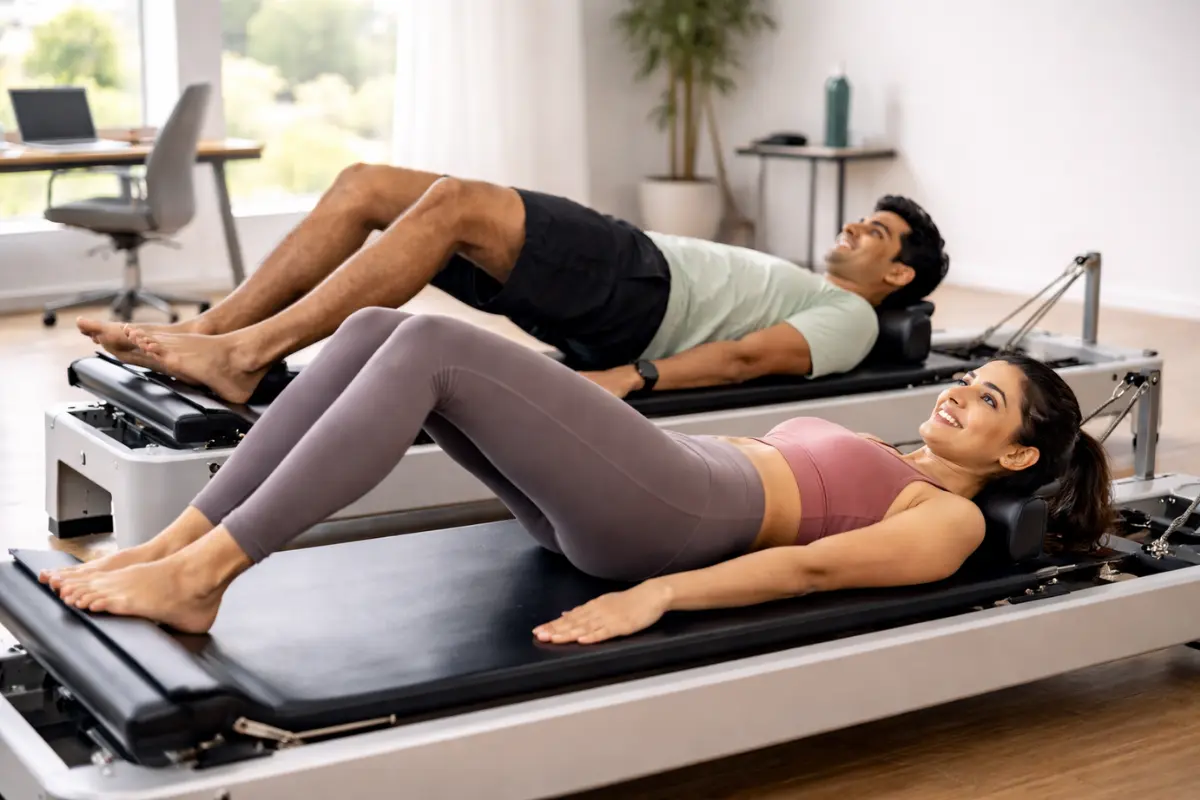
Back pain has become one of the most common health concerns in today’s digital and desk-bound lifestyle. With long hours spent sitting at desks, working on laptops, and constantly using mobile devices, the human body is under continuous strain. In a fast-growing city like Bengaluru, where many professionals work in office-based environments, this issue is even more widespread.
What often begins as mild discomfort in the lower back can gradually turn into chronic pain if left unaddressed. While many people rely on temporary solutions like painkillers or massages, these methods only provide short-term relief. The real solution lies in addressing the root cause of the problem—and that’s where Pilates comes in.
If you are experiencing persistent discomfort, starting with Professional Pilates classes for beginners and experts can help you build strength, improve posture, and reduce pain in a sustainable way.
Why Long Hours of Sitting Cause Back Pain
The human body is designed for movement, not prolonged sitting. When you sit for extended periods, especially with poor posture, several imbalances develop in your body.
Some of the most common causes include:
- Weak core muscles that fail to support the spine
- Tight hip flexors due to constant sitting
- Increased pressure on the lower back (lumbar spine)
- Poor posture, such as slouching or leaning forward
Over time, these issues lead to stiffness, reduced mobility, and chronic pain.
How Pilates Addresses the Root Cause
Unlike temporary fixes, Pilates focuses on correcting the underlying issues that cause back pain. It strengthens weak muscles, improves alignment, and enhances flexibility—all of which are essential for long-term relief.
1. Strengthens Core Muscles
A weak core is one of the primary reasons for back pain. The core muscles act as a support system for your spine. When they are weak, the lower back takes on more pressure, leading to discomfort.
Pilates specifically targets deep core muscles, helping to stabilize the spine and reduce strain. Many individuals are now opting for Core strength training Bengaluru to build a strong and supportive core.
2. Improves Posture and Spinal Alignment
Poor posture is a major contributor to back pain. Sitting with rounded shoulders or a curved spine places unnecessary stress on your back.
Pilates emphasizes proper alignment and teaches you how to maintain a neutral spine. Over time, this helps correct posture both during workouts and in daily life.
3. Reduces Muscle Tightness and Stiffness
Sitting for long hours causes certain muscles—especially in the hips, hamstrings, and lower back—to become tight. This restricts movement and increases discomfort.
Pilates includes controlled stretching exercises that improve flexibility and release tension, helping your body move more freely.
4. Enhances Body Awareness
One of the most important benefits of Pilates is increased body awareness. You become more conscious of how you sit, stand, and move throughout the day.
This awareness helps you identify and correct habits that contribute to back pain, such as slouching or improper sitting positions.
Why Professionals in Bengaluru Are Choosing Pilates
With increasing awareness about posture and spinal health, more professionals are enrolling in Pilates classes Bengaluru as a long-term solution for back pain.
Pilates is particularly well-suited for modern lifestyles because:
- It is low-impact and safe
- It fits into busy schedules
- It provides long-term results instead of temporary relief
- It improves both physical and mental well-being
Pilates for Men and Active Individuals
Back pain is not limited to office workers. Athletes and active individuals can also experience discomfort due to improper movement patterns or muscle imbalances.
This has led to growing interest in Pilates for men Bengaluru, as Pilates helps improve flexibility, mobility, and overall performance.
Additional Benefits Beyond Back Pain Relief
While Pilates is highly effective for reducing back pain, its benefits go far beyond that. Regular practice can also:
- Improve overall flexibility and mobility
- Enhance balance and coordination
- Strengthen the entire body
- Reduce stress and mental fatigue
- Improve posture and movement efficiency
Simple Daily Habits to Support Your Recovery
To maximize the benefits of Pilates, it is important to combine it with healthy daily habits:
- Take short breaks every 30–60 minutes
- Maintain an ergonomic workstation
- Sit with proper posture (neutral spine)
- Stay physically active throughout the day
- Avoid prolonged static positions
These small changes, combined with regular Pilates practice, can make a significant difference.
How Long Does It Take to See Results?
One of the most common questions people ask is how quickly Pilates can reduce back pain. While results vary from person to person, many individuals begin to notice improvements within a few weeks of consistent practice.
With regular sessions, you can expect:
- Reduced stiffness and discomfort
- Improved posture
- Increased strength and flexibility
- Better overall movement
Conclusion
Back pain caused by long hours of sitting is a growing concern, but it doesn’t have to be a permanent problem. Pilates offers a holistic and effective solution by addressing the root causes—weak core muscles, poor posture, and lack of movement.
By incorporating Pilates into your routine, you can not only relieve pain but also build a stronger, more balanced body. With consistent practice and the right guidance, you will experience lasting improvements in both your physical health and overall quality of life.