Starting Reformer Pilates for the first time can feel exciting—and a little unfamiliar. The Reformer machine, controlled movements, springs, straps and different exercises may look complicated at first, but beginners can learn the basics gradually with proper instruction.
If you are considering Reformer Pilates in Bangalore, knowing what to expect before your first class can make the experience much more comfortable.
Here are 10 things every beginner should know before their first Reformer Pilates class.
1. You Don’t Need Previous Pilates Experience
One of the biggest misconceptions about Pilates is that you need to be flexible, strong or experienced before joining a class.
You don’t.
A beginner Reformer class is designed to introduce you to the equipment, basic movements, breathing patterns and body positioning step by step. Whether you are completely new to Pilates or returning to exercise after a break, your starting point can be adapted to your current ability.
If you’re looking for structured Beginner Pilates classes in RR Nagar, focusing on learning the fundamentals first can help you build confidence.
2. The Reformer Is More Than Just a Machine
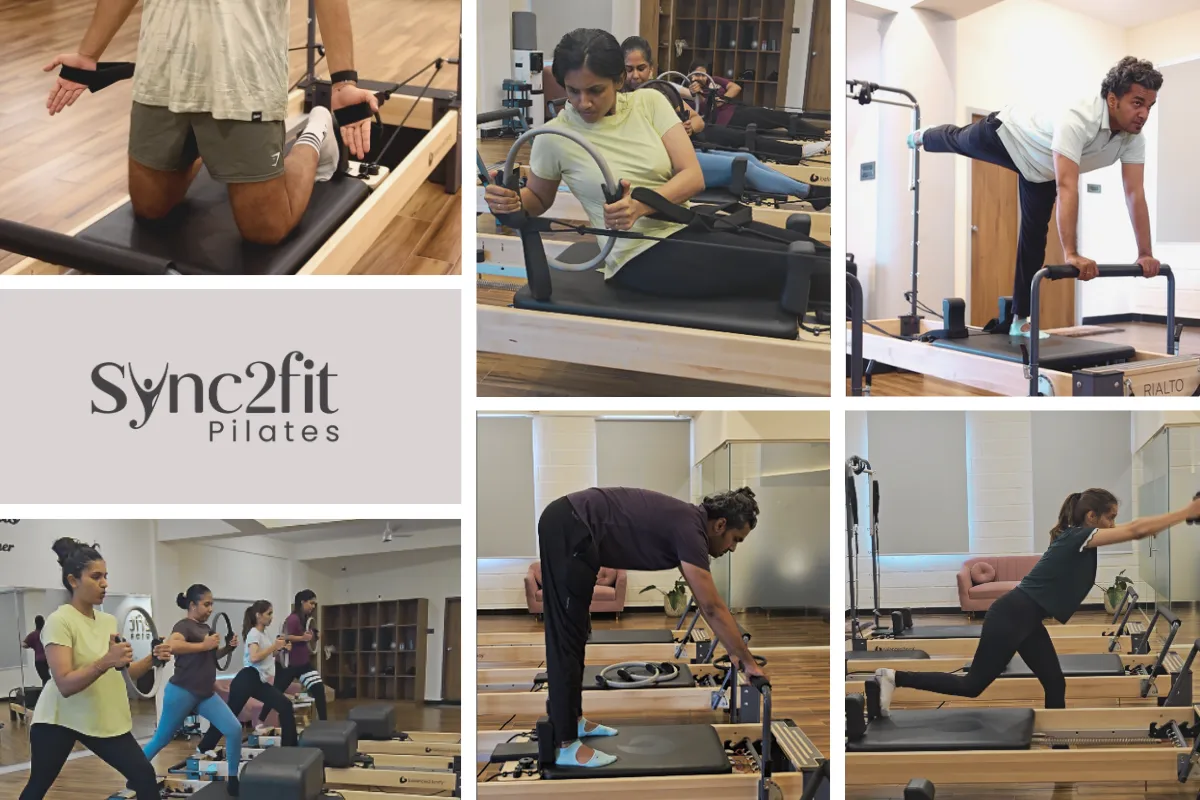
The Pilates Reformer has a moving carriage, springs, straps, a footbar and other components that work together to create resistance.
Instead of simply lifting weights, you perform controlled movements against adjustable resistance.
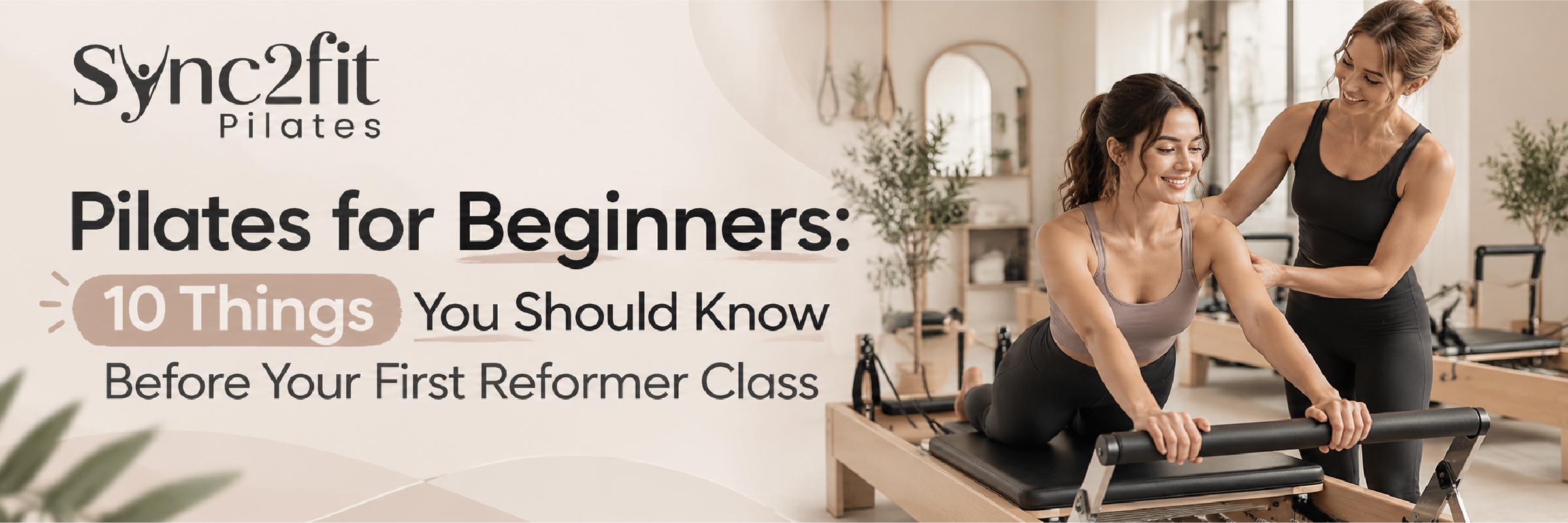
The equipment can be used to work different muscle groups while challenging stability, coordination and control. Your instructor will guide you on how to position your body and use the equipment safely.
This is why supervised instruction is especially useful during your first few sessions.
3. You May Feel Muscles You Don’t Usually Notice
Don’t be surprised if your first class activates muscles you rarely think about during everyday workouts.
Pilates often focuses on controlled movement and stabilisation rather than simply completing as many repetitions as possible.
Your core plays an important role, but the workout can also involve your legs, glutes, back, shoulders and arms.
For people interested in Core strength training Bengaluru, Reformer Pilates can be a way to develop greater control and stability through intentional movement.
4. Small Movements Can Be Surprisingly Challenging
Pilates isn’t necessarily about making big or fast movements.
A small movement performed slowly and with control can be challenging because you are paying attention to alignment, breathing, stability and muscle engagement.
You may find that an exercise that looks simple requires considerable concentration.
This is one reason beginners shouldn’t compare themselves with people who have been practising Pilates for months or years. Your first goal should be learning the movement correctly, not keeping up with everyone else.
5. Your Instructor Will Help You Adjust the Resistance
The Reformer uses springs to provide resistance and support.
The amount of resistance isn’t simply about making the workout “harder.” Different spring settings can change how an exercise feels and how much assistance or resistance you receive.
Your instructor can adjust the setup according to the exercise and your experience level.
If something feels too difficult, unstable or uncomfortable, communicate with your instructor. Pilates is about controlled movement—not pushing through poor technique.
6. Comfortable Workout Clothes Are Enough
You don’t need specialised equipment or complicated workout clothing for your first class.
Choose comfortable, fitted or flexible clothing that allows you and your instructor to see your body alignment. Since Reformer Pilates is generally performed without traditional athletic shoes, many studios use grip socks for better traction and hygiene.
Avoid excessively loose clothing that may get in the way of straps or make it difficult for the instructor to observe your movement.
Most importantly, wear something that allows you to move comfortably.
7. Expect to Focus on Breathing and Control
Breathing is an important part of Pilates.
Your instructor may guide you through specific breathing patterns while you perform an exercise. This can initially feel unfamiliar because you’re trying to coordinate several things at once—breathing, posture, movement and muscle engagement.
Don’t worry if you don’t get everything right during your first class.
With practice, these elements become more natural.
Learning body awareness is also an important part of the process. You can explore more about this in our guide to how Pilates improves body awareness during everyday movement.
8. You May Be Sore After Your First Class
If your body isn’t used to certain movements, you may experience mild muscle soreness after your first session.
This doesn’t mean you need to push yourself harder during the next class.
Give your body time to recover, stay hydrated and follow your instructor’s recommendations. As your body becomes familiar with the movements, the experience may feel more manageable.
Consistency is generally more useful than trying to do too much too quickly.
If you’re wondering how frequently Pilates should be practised, our guide on how often you need Pilates to see results provides more information.
9. Don’t Expect a Complete Transformation After One Class
Your first Reformer class is primarily about learning.
You are becoming familiar with the equipment, understanding basic movements and discovering how your body responds to the exercises.
You may notice that your body feels worked after the session, but meaningful changes usually require regular practice over time.
With consistent Pilates training, people may work toward improvements in areas such as:
- Core strength and stability
- Flexibility
- Balance and coordination
- Body awareness
- Movement control
- Postural awareness
- Overall movement confidence
If you’re interested in structured Pilates training in Bangalore, focus on building a sustainable routine rather than chasing immediate results.
10. Your First Class Is About Progress, Not Perfection
Perhaps the most important thing to remember is that you don’t need to be perfect on day one.
You may forget the breathing pattern.
You may need help adjusting the Reformer.
You may struggle with an exercise that looks easy.
That’s completely normal for a beginner.
Pilates is a practice where coordination and control develop with repetition. Instead of asking, “Am I good at Pilates yet?” ask yourself, “Am I learning something new about how my body moves?”
That mindset can make your first few classes much more enjoyable.
What Should You Expect During Your First Reformer Pilates Class?
While every studio structures its sessions differently, a beginner session may generally include:
Introduction: Your instructor explains the Reformer and basic safety points.
Warm-up: Simple movements help you become comfortable with the equipment.
Fundamental exercises: You learn basic Reformer movements with guidance.
Core and full-body work: Exercises gradually introduce more controlled movement.
Cool-down: The session ends with slower movements and stretching.
The exact exercises, duration and intensity can vary depending on the class and individual needs.
For a broader introduction, you can also read our Beginner’s Guide to Pilates Classes in Bengaluru.
Reformer Pilates vs. Mat Pilates for Beginners
Beginners often wonder whether they should start with Mat Pilates or Reformer Pilates.
The two approaches share Pilates principles, but the equipment and exercise experience are different.
The Reformer provides adjustable resistance and support, while Mat Pilates primarily uses your body weight and a mat.
Neither needs to be viewed as a replacement for the other. Your choice can depend on your goals, preferences, instructor guidance and available classes.
You can learn more about the differences in our detailed guide to Reformer Pilates vs. Mat Pilates.
Is Reformer Pilates Suitable for Beginners?
Yes, beginners can learn Reformer Pilates when the class is appropriately structured and instruction is provided.
The key is to start at a suitable level and learn the fundamentals before progressing to more challenging movements.
For anyone searching for Professional Pilates classes for beginners and experts, choosing a studio with trained instructors and beginner-friendly sessions can make the learning process easier.
Start Your Pilates Journey One Class at a Time
Your first Reformer Pilates class doesn’t need to be intimidating.
You don’t need perfect flexibility. You don’t need previous experience. And you don’t need to master every exercise immediately.
Start by learning the equipment, understanding your instructor’s cues, controlling your movements and becoming more aware of your body.
With regular practice, those unfamiliar movements can gradually become part of your routine.
If you’re exploring Pilates classes Bengaluru, Sync2Fit Pilates offers a space to learn, move and build your Pilates practice step by step.
Ready to try your first Reformer Pilates class? Book your session with Sync2Fit Pilates and start your journey one movement at a time.