Aging is a natural part of life, but getting older doesn’t mean giving up strength, flexibility, balance or an active lifestyle. The way we exercise may simply need to change as our bodies change.
This is where Pilates can become a valuable part of a long-term fitness routine.
Unlike workouts that focus mainly on speed, heavy lifting or high-impact movements, Pilates emphasises controlled movement, core stability, balance, flexibility, posture and body awareness. These qualities can become increasingly important as we age.
Whether you’re starting exercise after 30, maintaining fitness in your 40s or looking for a sustainable workout routine later in life, Pilates can support a movement-focused approach to healthy aging.
What Makes Pilates Suitable for Healthy Aging?
Pilates is built around controlled and intentional movement. Instead of rushing through repetitions, you focus on how your body moves, how you breathe and how you maintain alignment.
This approach makes Pilates adaptable to different fitness levels.
A well-structured Pilates session can work multiple areas of fitness, including:
- Core strength
- Muscular endurance
- Flexibility
- Balance
- Coordination
- Postural awareness
- Mobility
- Body awareness
For people searching for Professional Pilates classes for beginners and experts, the ability to adjust exercises according to experience and ability is particularly useful for creating a sustainable routine.
1. Pilates Helps Maintain Core Strength
Core strength isn’t only about having visible abdominal muscles.
Your core helps provide stability while you sit, stand, walk, bend and perform everyday movements. As we get older, maintaining functional strength becomes an important part of staying active.
Pilates regularly incorporates controlled exercises that challenge the muscles around the abdomen, back and pelvis.
If you’re interested in developing this area, explore Core strength training Bengaluru to understand how Pilates can incorporate core-focused movement into a workout routine.
2. It Supports Flexibility and Mobility
Feeling stiff after sitting for long periods can become increasingly noticeable with age.
Pilates combines strengthening movements with controlled ranges of motion, helping you practise moving different parts of your body deliberately.
Regular movement can be especially valuable for people who spend much of their day sitting at a desk or following a relatively sedentary routine.
Rather than treating flexibility as something you either have or don’t have, Pilates encourages gradual improvement through consistent practice.
Read more about how Pilates can improve flexibility and help support movement.
3. Pilates Can Challenge Balance and Coordination
Balance becomes an important part of functional fitness as we age.
Pilates exercises can require you to control your body position, stabilise yourself and coordinate different movements.
This isn’t simply about standing on one leg. Balance involves the interaction of strength, coordination, concentration and body awareness.
Practising these skills during exercise can help you become more conscious of how your body responds to movement.
You can also explore our guide on how Pilates can improve balance and coordination.
4. It Encourages Better Body Awareness
One of the most valuable aspects of Pilates is that it asks you to pay attention.
Are your shoulders relaxed?
Is your spine positioned comfortably?
Are you controlling the movement?
Are you breathing consistently?
This awareness can extend beyond the studio. You may start noticing how you sit at your desk, how you stand, how you carry objects or how you move during everyday activities.
This is one reason Pilates can be more than just another workout—it can become a way of understanding your movement habits.
For a deeper look, read How Pilates Improves Body Awareness During Everyday Movement.
5. Low-Impact Movement Can Be Easier to Maintain
Not everyone wants or needs a high-impact workout to stay active.
Pilates is generally considered a low-impact form of exercise, meaning many movements place less repetitive impact on the joints than activities such as running or jumping.
That doesn’t mean Pilates is necessarily easy.
Controlled movements can still challenge your muscles and stability without requiring high-impact exercises.
For adults looking for a workout they can incorporate into a long-term routine, this can make Pilates an appealing option.
Our guide on why Pilates is a low-impact workout for all ages explores this approach in more detail.
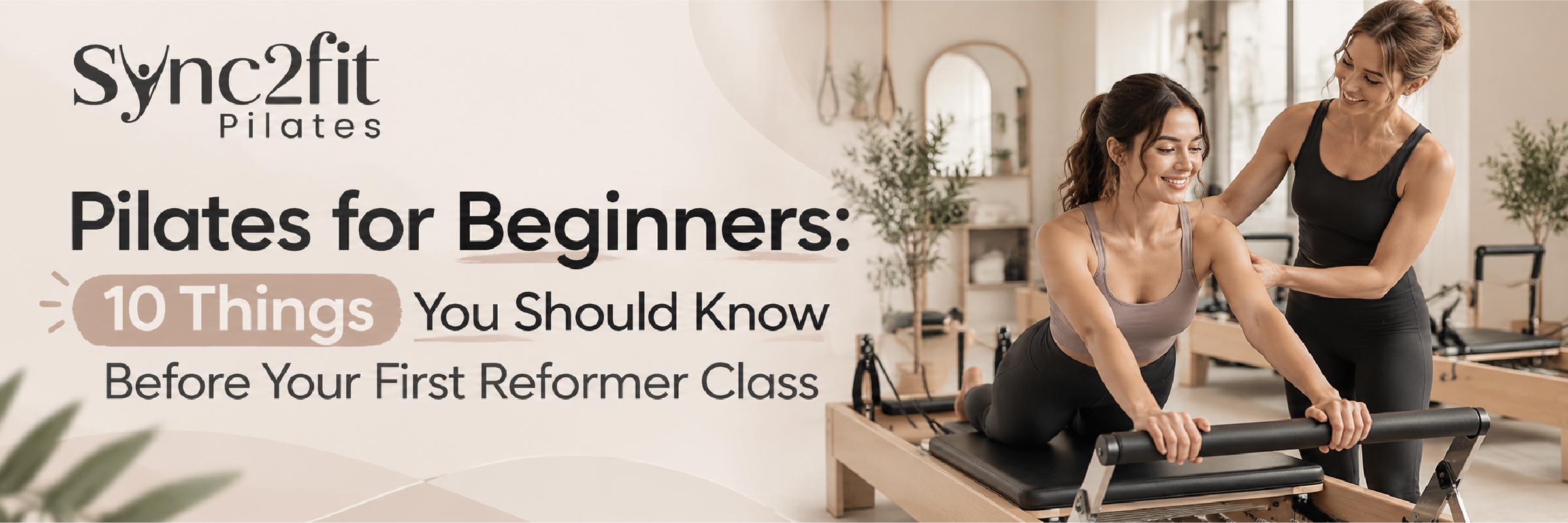
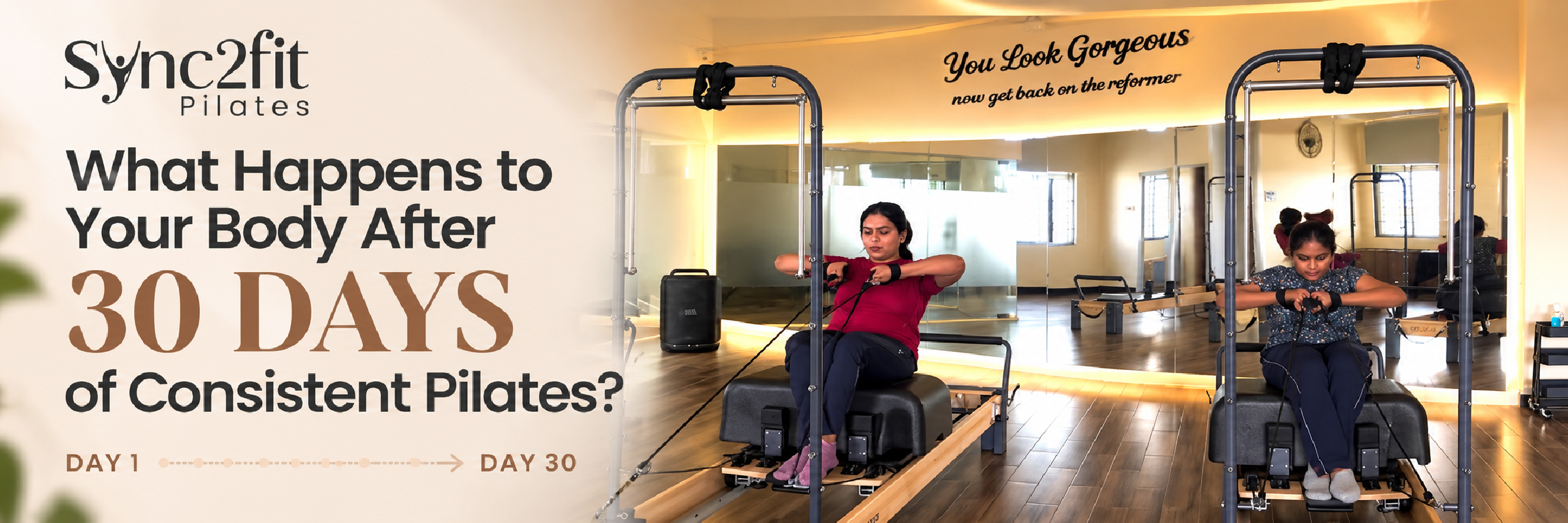
6. Reformer Pilates Adds Adjustable Resistance
As your Pilates practice develops, you may want additional resistance and variety.
That’s where the Reformer comes in.
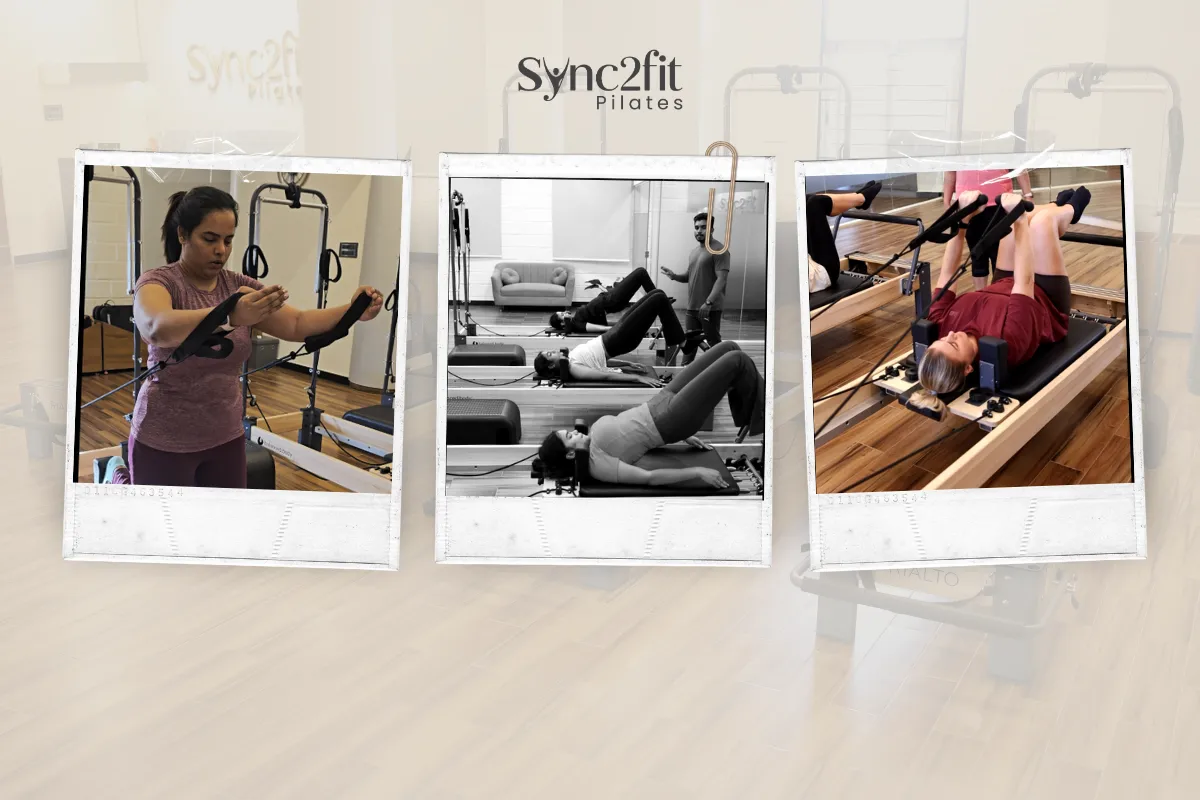
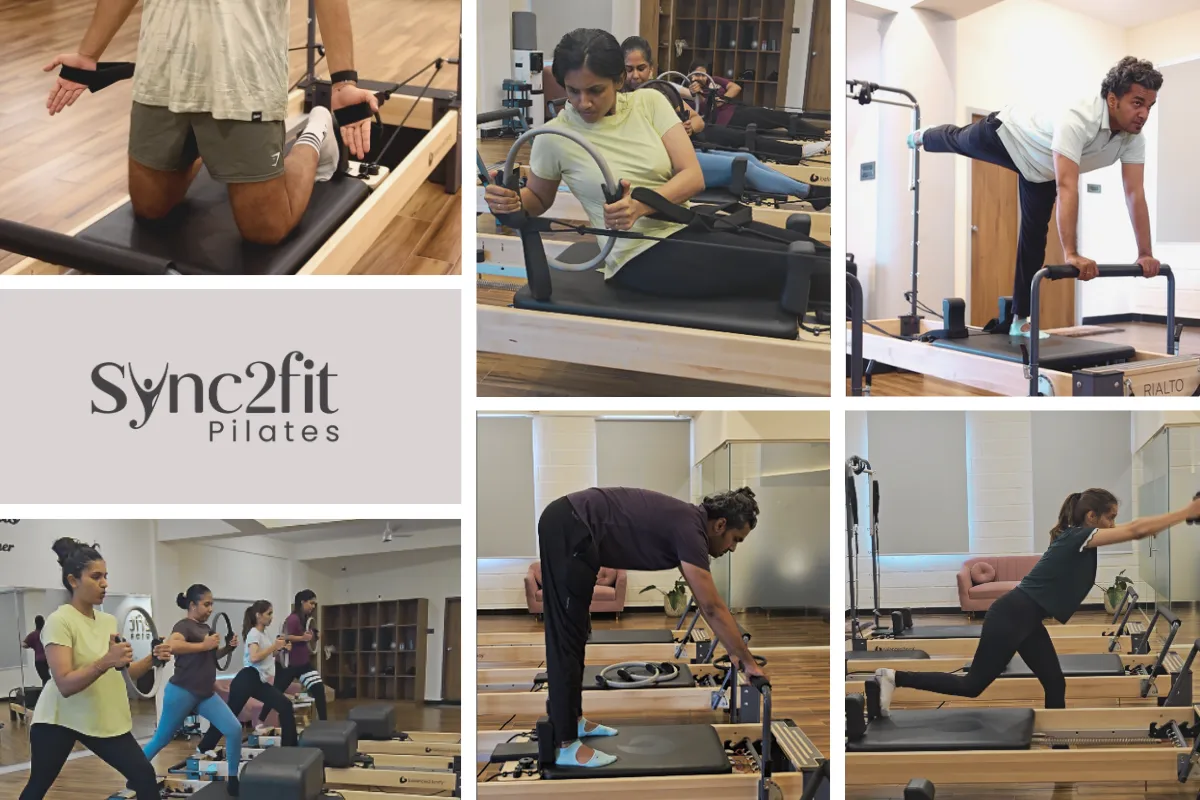
The Reformer uses springs, a moving carriage, straps and other components to create resistance and support during different exercises.
The resistance can be adjusted according to the exercise and the individual’s experience.
For those considering Reformer Pilates Bangalore, this can provide a structured way to progressively challenge strength, stability and movement control.
You can also read about the benefits of Reformer Pilates for core strength and posture.
7. Pilates Can Support Better Postural Awareness
Modern lifestyles often involve extended periods of sitting, driving and looking at screens.
Over time, people may become more aware of habits such as rounded shoulders, prolonged sitting or poor movement patterns.
Pilates places considerable attention on alignment and controlled positioning.
Rather than simply telling yourself to “sit straight,” Pilates gives you opportunities to practise stability and alignment while moving.
This can contribute to greater awareness of how you position your body during everyday activities.
8. It Can Be Adapted as Your Fitness Level Changes
Healthy aging isn’t about maintaining exactly the same workout routine forever.
Your fitness level, schedule, goals and physical needs can change over time.
A useful exercise routine should be able to change with you.
Pilates offers different levels of exercises, from foundational movements for beginners to more challenging exercises for experienced practitioners.
This makes it possible to focus on learning the fundamentals first and gradually increase the challenge.
If you’re new to Pilates, our Beginner’s Guide to Pilates Classes in Bengaluru can help you understand what to expect.
9. Consistency Matters More Than Doing Too Much
One of the biggest mistakes people make when starting a fitness routine is trying to do everything at once.
Healthy aging is a long-term process, so your workout routine should be sustainable.
Instead of exercising extremely hard for a short period and then stopping, consistent sessions can help you build exercise into your lifestyle.
Pilates doesn’t have to be about constantly increasing intensity. You can focus on improving technique, control, mobility and strength over time.
Read more about why consistency matters more than intensity in Pilates.
10. Pilates Can Help You Stay Connected to Everyday Movement
The ultimate goal of fitness isn’t necessarily to perform complicated exercises.
It’s also about being able to move through everyday life with confidence.
Getting out of a chair, climbing stairs, carrying groceries, reaching for something on a shelf, walking comfortably or maintaining an active routine all involve different combinations of strength, mobility, balance and coordination.
Pilates trains many of these qualities through controlled movement.
That makes it relevant not only inside the studio but also as part of an active lifestyle.
Is Pilates Suitable for Everyone as They Age?
Pilates can be adapted to different experience and fitness levels, but individual needs vary.
If you have an injury, medical condition, significant pain or specific physical limitations, it’s important to speak with an appropriate healthcare professional before beginning a new exercise programme. A qualified Pilates instructor can then work within appropriate boundaries and provide exercise modifications where suitable.
The goal isn’t to compete with younger participants or push through discomfort.
It’s to build a movement practice that works for your current body and your long-term goals.
Mat Pilates or Reformer Pilates for Healthy Aging?
Both Mat Pilates and Reformer Pilates can be part of a balanced fitness routine.
Mat Pilates primarily uses your body weight and a mat, while Reformer Pilates uses equipment to provide adjustable resistance and support.
Your choice may depend on your experience, goals, preferences and access to suitable instruction.
If you’re deciding between the two, our guide to Reformer Pilates vs. Mat Pilates explains the key differences.
Healthy Aging Starts With How You Move Today
Aging well isn’t about trying to stop the clock.
It’s about maintaining the physical qualities that help you stay active and independent as your lifestyle changes.
Strength, flexibility, balance, coordination and body awareness all have a place in a long-term approach to fitness.
That’s why Pilates can be a practical addition to a healthy aging routine. With appropriate instruction and consistent practice, it provides a structured way to keep working on how you move—not just how much you exercise.
If you’re looking for Pilates training in Bangalore, Sync2Fit Pilates offers guided Pilates sessions designed for different experience levels.
Start where you are, move with control and build your strength one session at a time.